Functional Principal Component Analysis
Frédéric PROTIN
Mathematician, Torus AI, PhD
July 6th, 2023
Abstract
Functional PCA is a generalization of the PCA method of
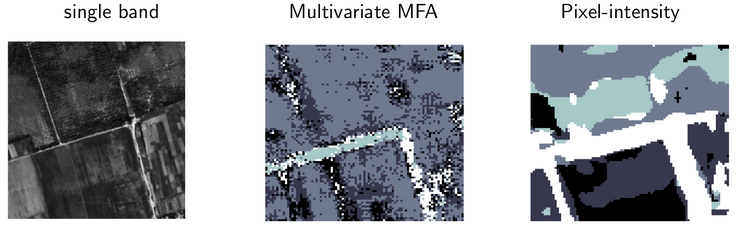
A Bayesian Framework for Multivariate Multifractal Analysis of Signals and Images
Lorena LEON
Institut de Recherche en Informatique de Toulouse (IRIT), Université de Toulouse
January 26th, 2023
Abstract
This talk introduces
From Dilated Convolution With Learnable Spacings to Gaussian Mixture Kernel Convolution
Ismail KHALFAOUI HASSANI
PhD student at ANITI
November 10th, 2022
Abstract
Recent works indicate that convolutional neural networks (CNN) need
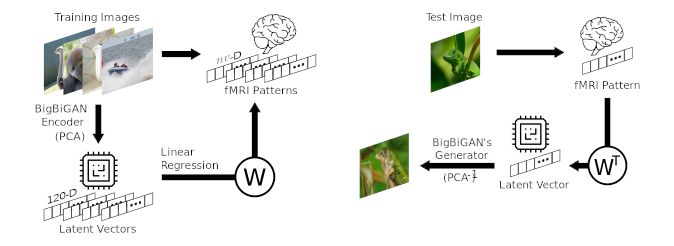
Reconstructing Natural Scenes from fMRI Patters Using Deep Generative Networks
Milad MOZAFARI
Research Scientist at Torus AI
November 10th, 2022
Abstract
Decoding and reconstructing images from brain imaging data is
“Self-Supervised Learning from Images with a Joint-Embedding Predictive Architecture”, the latest paper from Yann Lecun’s team at Meta
#ComputerVision #Self-SupervisedLearning #SSL #RepresentationLearning #I-JEPA
Introduction
I-JEPA [1], the latest self-supervised model from Meta AI, has been officially released: the
DeepXplore: Unleashing the Power of Automated Whitebox Testing for Deep Learning Systems
https://arxiv.org/abs/1705.06640
Authors: Kexin Pei, Yinzhi Cao , Junfeng Yang, Suman Jana
Introduction
DL systems often exhibit
EfficientNetV2: Smaller Models & Faster Training
#CNN #EfficientNet #model scaling #progressive learning
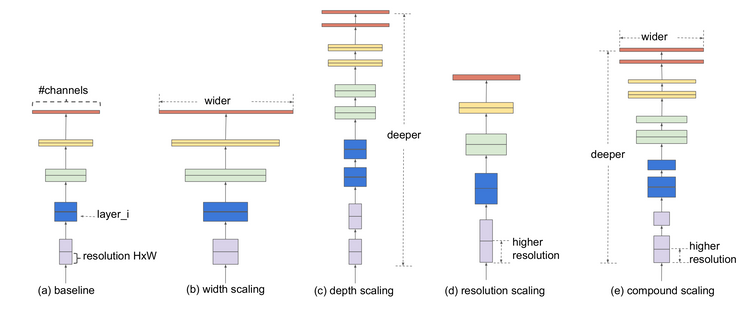
Model scaling
EfficientNet was first proposed in the original paper of Mingxing Tan &
Depth Map
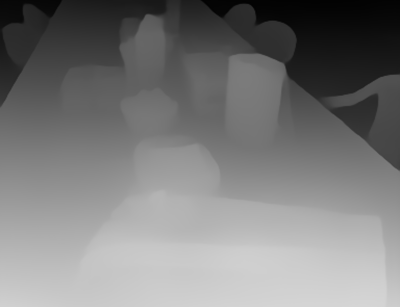
A depth map is a heatmap of a picture, which indicates the distance relative to the camera. It contains fundamental
Unsupervised Learning in Spiking Neural Networks
Introduction
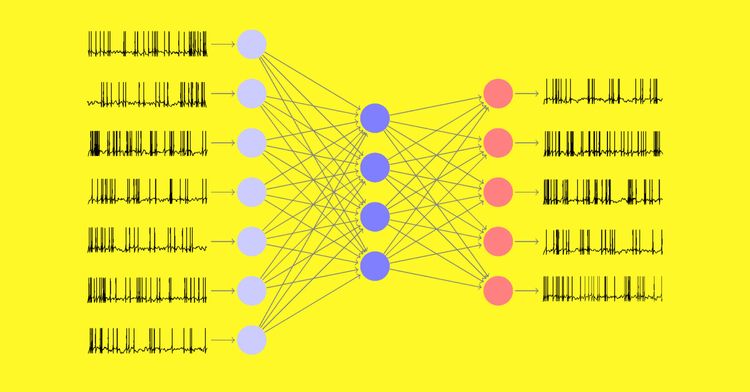
Spiking neural networks (SNNs) are computational models inspired by the biological behavior of neurons in the brain. These networks
Overview of Self Supervised Learning
Introduction
In this blog post, we’ll explore the concept of self-supervised learning, its potential for pushing AI toward human-level